
Description
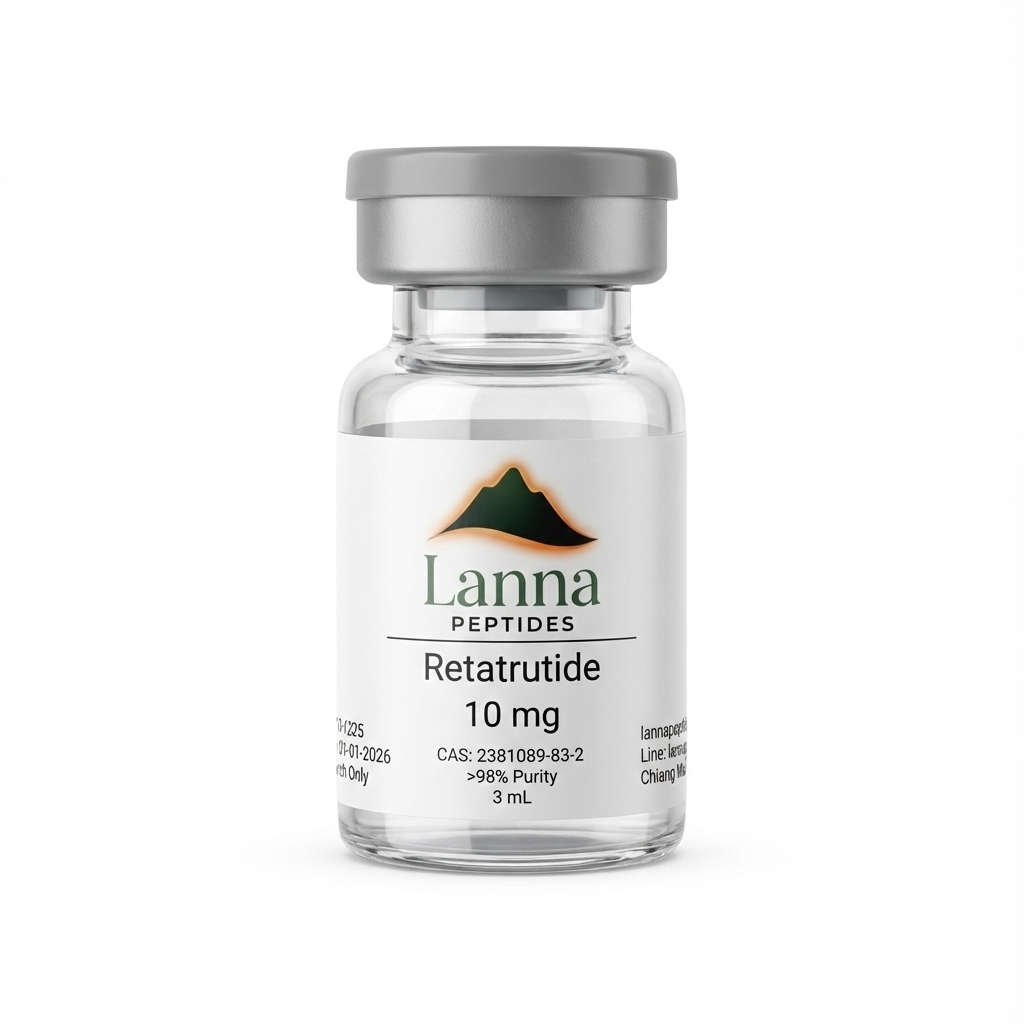
What is Retatrutide?
Retatrutide (development code LY3437943) represents a third-generation incretin-based therapeutic developed by Eli Lilly and Company. As a highly potent, single-molecule tri-agonist for the glucose-dependent insulinotropic polypeptide (GIP), glucagon-like peptide-1 (GLP-1), and glucagon (GCG) receptors, it has demonstrated unprecedented efficacy in clinical trials for obesity and related metabolic disorders. Phase 2 data revealed a mean weight reduction exceeding 24% of body weight, positioning it as a potential paradigm shift in the pharmacological management of metabolic disease. As of late 2025, the extensive Phase 3 TRIUMPH program has yielded positive topline results, and regulatory submissions have been filed with the FDA and EMA, with approval for chronic weight management anticipated in early 2026.
Physiological Benefits
- ✔1. Unprecedented Weight Loss: Achieves mean weight loss of over 24% at 48 weeks and potentially over 25-28% at 72+ weeks, far exceeding previous pharmacological options.
- ✔2. Superior Glycemic Control: In patients with T2DM, it leads to dramatic reductions in HbA1c, with a high percentage of patients achieving normoglycemia.
- ✔3. Profound Reduction in Liver Fat: Demonstrates a remarkable ability to resolve steatosis (fatty liver), with studies showing over 80% of patients with MASH/NAFLD achieving normalization of liver fat content.
- ✔4. Significant Blood Pressure Reduction: Causes clinically meaningful reductions in both systolic and diastolic blood pressure, independent of weight loss, contributing to cardiovascular risk reduction.
- ✔5. Favorable Lipid Profile Improvements: Leads to significant reductions in triglycerides and LDL-cholesterol (“bad cholesterol”) and an increase in HDL-cholesterol (“good cholesterol”).
- ✔6. Improvement in Obstructive Sleep Apnea (OSA): Ongoing trials show a significant reduction in the apnea-hypopnea index (AHI), suggesting it may be a viable non-surgical treatment for obesity-related OSA.
- ✔7. Preservation of Lean Body Mass: While causing massive fat loss, Retatrutide appears to have a relatively favorable effect on preserving lean mass compared to caloric restriction or bariatric surgery alone.
- ✔8. Reduction in Visceral Adiposity: Preferentially targets visceral fat—the metabolically harmful fat stored around internal organs—which is strongly linked to cardiovascular disease and insulin resistance.
- ✔9. High Rates of Clinically Meaningful Weight Loss: Over 90% of participants achieve at least 5% weight loss, and a majority achieve over 20% and 25% weight loss thresholds.
- ✔10. Potential for Disease Modification in Osteoarthritis: Trials are investigating whether the significant weight reduction can slow the progression of weight-bearing joint diseases like knee osteoarthritis.
Use Cases
1. Chronic Weight Management
The primary use case for individuals with obesity (BMI ≥30) or who are overweight (BMI ≥27) with at least one weight-related comorbidity. Administered via once-weekly subcutaneous injection.
2. Type 2 Diabetes Mellitus (T2DM)
As a monotherapy or add-on therapy for patients with T2DM, particularly those with comorbid obesity, to achieve both glycemic control and substantial weight loss.
3. Metabolic Dysfunction-Associated Steatohepatitis (MASH)
As a potential first-in-class treatment for MASH (formerly NAFLD/NASH) due to its profound effects on reducing liver fat, inflammation, and fibrosis.
4. Obesity-Related Obstructive Sleep Apnea (OSA)
A novel therapeutic approach to reduce the severity of OSA by targeting the underlying factor of excess weight and fat deposition in the upper airway.
5. Cardiovascular Risk Reduction
Used in patients with established cardiovascular disease and obesity to reduce the risk of major adverse cardiovascular events (MACE) through weight loss, and improved blood pressure, lipids, and glucose control. A dedicated Cardiovascular Outcomes Trial (CVOT) is ongoing.
6. Adjunct to Bariatric Surgery
For patients who experience insufficient weight loss or significant weight regain after bariatric surgery.
7. Obesity-Related Heart Failure with Preserved Ejection Fraction (HFpEF)
Investigational use to improve symptoms, physical function, and cardiac parameters in this difficult-to-treat patient population.
8. Polycystic Ovary Syndrome (PCOS)
Investigational use to address the insulin resistance and obesity components of PCOS, potentially improving metabolic and reproductive outcomes.
Common Research Protocols
⚠ Research Use Only
The following data is for educational purposes only. Lanna Peptides compounds are not for human consumption.
| Route | Typical Dosage & Titration Schedule | Frequency | Notes | |
|---|---|---|---|---|
| Subcutaneous (SubQ) Injection | Starting Dose: 2.5 mg Titration: Increase dose every 4 weeks as tolerated. 2.5 mg → 5 mg → 7.5 mg → 10 mg → 12 mg. Maintenance Doses: The most common target maintenance doses in trials are 8 mg and 12 mg. |
Once-Weekly | Titration is CRITICAL for managing gastrointestinal side effects. Patients who cannot tolerate an increase may stay at a lower dose or slow the titration schedule under medical supervision. The injection site should be rotated (abdomen, thigh, or upper arm). |
Need more technical data?
For a comprehensive analysis including Mechanism of Action, Chemical Structure, Pharmacokinetics, and complete Safety Profile, click the button below to review the full Clinical Summary of Retatrutide.
Reviews
There are no reviews yet.