
Description
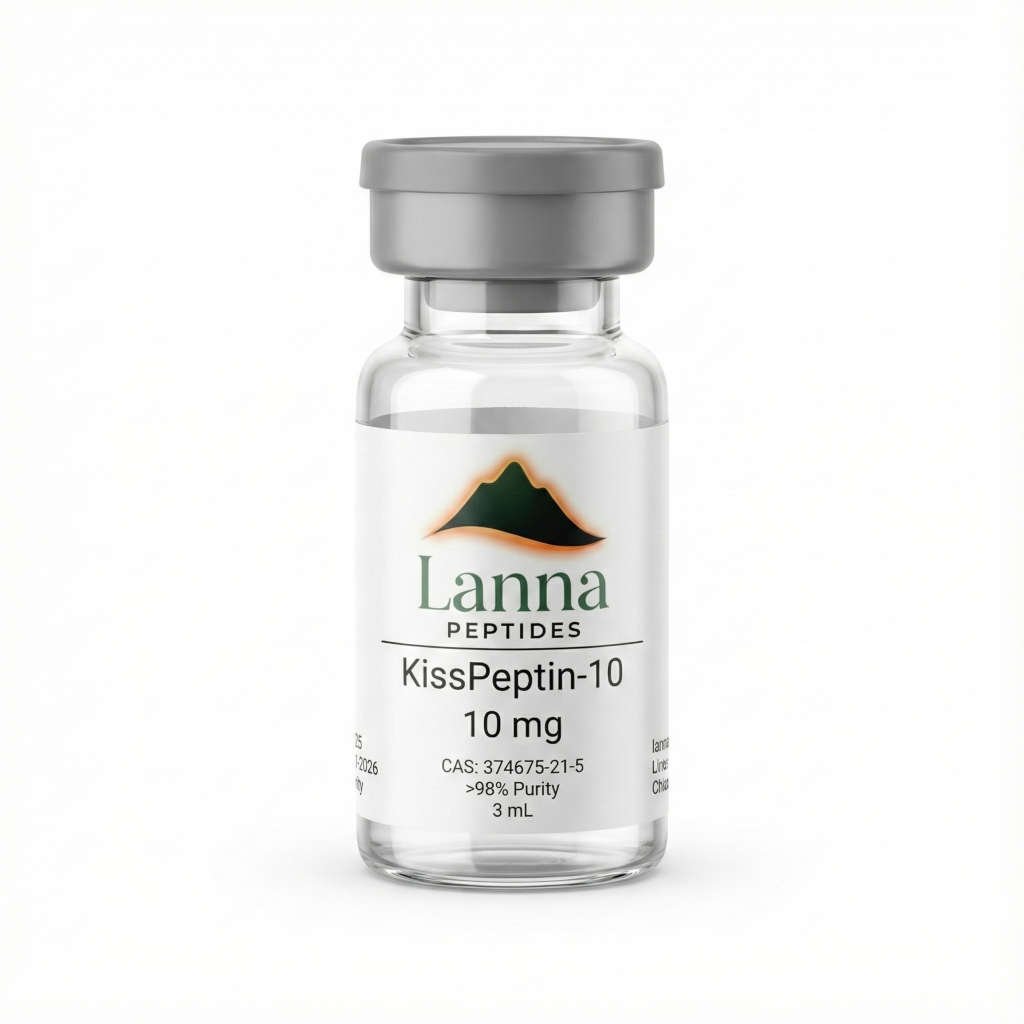
What is Kisspeptin-10?
Kisspeptin-10 is a potent vasoconstrictor and angiostatic peptide which serves as the “master regulator” of the reproductive system. By binding to the KISS1R receptor in the hypothalamus, it stimulates the pulsatile release of Gonadotropin-Releasing Hormone (GnRH), subsequently triggering the release of Luteinizing Hormone (LH) and Follicle-Stimulating Hormone (FSH). This mechanism makes it a powerful tool for restoring natural testosterone production, treating infertility, and restarting the HPG axis after suppression, without the side effects of direct TRT.
Physiological Benefits
- ✔Potent Stimulation of GnRH Release: Acts as the most powerful known natural secretagogue for GnRH, effectively “turning on” the entire reproductive cascade.
- ✔Increases Luteinizing Hormone (LH): Directly leads to a robust, dose-dependent increase in LH secretion from the pituitary gland.
- ✔Increases Follicle-Stimulating Hormone (FSH): Similarly elevates FSH levels, crucial for gametogenesis in both sexes.
- ✔Boosts Endogenous Testosterone Production: In males, the LH surge stimulates the testes to produce testosterone, making it a powerful tool for addressing low testosterone originating from hypothalamic or pituitary insufficiency (secondary or tertiary hypogonadism).
- ✔Induction of Puberty: Can successfully initiate puberty in individuals with delayed onset due to HPG axis dysfunction.
- ✔Fertility Enhancement: In females, it can be used to trigger follicular maturation and ovulation, making it a target for novel infertility treatments. In males, it supports the hormonal environment necessary for spermatogenesis.
- ✔Diagnostic Tool: Can be used in a “kisspeptin stimulation test” to assess the functional integrity of the HPG axis, helping to diagnose the origin of reproductive disorders.
- ✔Potential for HPTA Restart: Theoretically ideal for restoring hypothalamic and pituitary function after suppression from exogenous anabolic steroids (a common “biohacking” application).
- ✔High Specificity: Acts specifically on KISS1R, minimizing off-target effects compared to broader hormonal therapies.
- ✔Rapid Onset of Action: Hormonal responses (LH, FSH) are observed within minutes of administration, although the effect is transient.
- ✔Mood and Libido Modulation: By influencing sex hormone levels and potentially acting directly on limbic brain circuits, it may positively impact libido and mood.
Use Cases
Its primary therapeutic target. By restoring pulsatile GnRH release, it can restore gonadal function in patients with hypothalamic defects.
Used anecdotally to restore the HPG axis after suppression by anabolic-androgenic steroids (AAS). Its upstream action is seen as superior to direct testicular stimulation with hCG.
Investigated as a novel agent to trigger final oocyte maturation during in vitro fertilization (IVF) cycles, potentially with a lower risk of Ovarian Hyperstimulation Syndrome (OHSS) compared to hCG.
Employed in clinical research to differentiate between hypothalamic and pituitary causes of hypogonadism. A normal response to kisspeptin suggests the pituitary is functional.
Can be used to initiate puberty in adolescents where it is pathologically delayed.
As a potential alternative to exogenous testosterone replacement therapy (TRT), as it stimulates the body’s own production, theoretically preserving testicular size and function.
Explored for its potential to increase libido, particularly in cases of psychosexual dysfunction linked to hormonal imbalances.
Because some cancers (e.g., prostate, breast) are hormone-dependent, kisspeptin analogs have been studied for their ability to induce profound desensitization and down-regulation of the HPG axis with continuous administration, similar to GnRH agonists.
Continuous (non-pulsatile) administration of kisspeptin can suppress the HPG axis, leading to a reversible state of infertility, making it a theoretical target for male contraceptive development.
Common Research Protocols
⚠ Research Use Only
The following data is for educational purposes only. Lanna Peptides compounds are not for human consumption.
| Route | Typical Dosage Range | Frequency | Notes & Context | |
|---|---|---|---|---|
| Subcutaneous (SubQ) | 1 – 10 mcg/kg | 1-3 times daily | Research/Clinical: This range is used in studies to elicit a significant gonadotropin response. Requires frequent dosing to maintain elevated levels. | |
| Subcutaneous (SubQ) | 50 – 150 mcg (total dose) | Once daily or every other day | Anecdotal (PCT/HPTA Restart): This is a common protocol in biohacking communities. The goal is to provide a daily pulsatile stimulus to the hypothalamus to encourage recovery of the natural hormonal rhythm. Often used for 2-4 weeks. |
Need more technical data?
For a comprehensive analysis including Mechanism of Action, Chemical Structure, Pharmacokinetics, and complete Safety Profile, click the button below to review the full Clinical Summary of Kisspeptin-10.
Reviews
There are no reviews yet.