Description
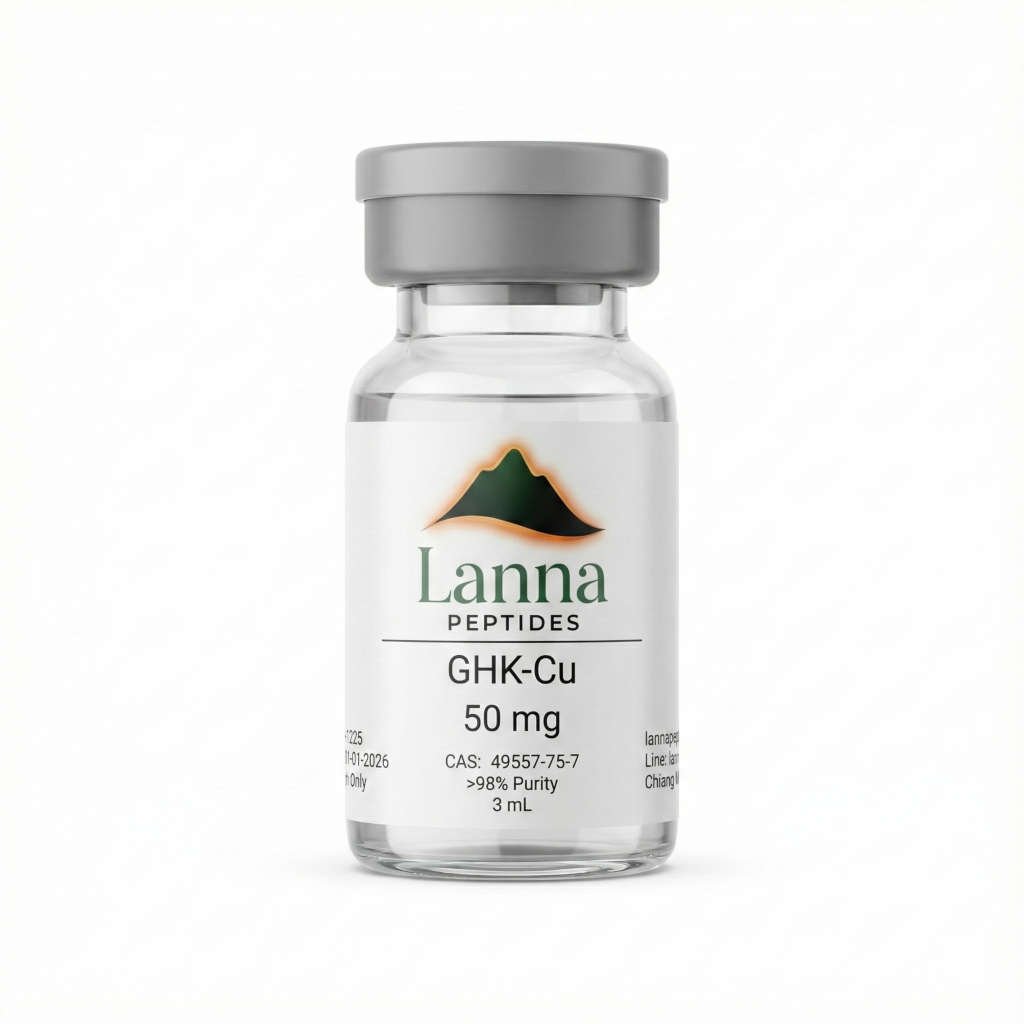
What is GHK-Cu?
GHK-Cu (Glycyl-L-Histidyl-L-Lysine Copper) is a naturally occurring tripeptide complex with a high affinity for copper ions. Discovered by Dr. Loren Pickart, it is a powerful signaling molecule capable of resetting gene expression to a healthier, younger state. Originally famous for its cosmetic applications in skin remodeling and hair growth due to robust collagen stimulation, its systemic benefits are now widely recognized. GHK-Cu promotes wound healing, reduces inflammation, and repairs DNA damage, establishing it as a versatile agent for tissue regeneration and anti-aging.
Physiological Benefits
- ✔Accelerated Wound and Tissue Repair: Significantly speeds up the healing of skin, connective tissue (tendons, ligaments), bone, and intestinal lining by promoting angiogenesis and ECM synthesis.
- ✔Potent Skin Rejuvenation and Anti-Aging: In cosmetic applications, it is proven to reduce fine lines and wrinkles, increase skin thickness and firmness, improve elasticity, and reduce hyperpigmentation.
- ✔Strong Anti-inflammatory Action: Systemically and locally reduces inflammation by modulating key cytokine pathways, making it beneficial for inflammatory conditions and injury recovery.
- ✔Hair Growth Stimulation: Enlarges hair follicles and stimulates growth, with efficacy comparable to minoxidil in some preclinical models.
- ✔Nerve Regeneration and Neuroprotection: Animal studies demonstrate its ability to promote nerve fiber regeneration and protect neural tissues from ischemic and oxidative damage.
- ✔Enhanced Collagen and Elastin Synthesis: Directly stimulates fibroblasts, leading to firmer, more youthful connective tissue and skin.
- ✔Systemic Anti-Aging via Gene Modulation: Its ability to reset thousands of genes to a “younger” state is its most compelling benefit for longevity research.
- ✔Support for Stem Cell Function: Helps maintain the health and proliferative capacity of stem cells, which are critical for ongoing tissue repair and regeneration.
- ✔Pain Reduction: Exhibits analgesic properties, likely linked to its anti-inflammatory effects and potential action on nerve endings.
- ✔Improved Gut Health: Preclinical models show it can accelerate the healing of the gastrointestinal lining in conditions like IBD and ulcers.
- ✔Cardioprotective and COPD-Reversal Effects: Animal and in-vitro studies suggest it can protect the heart from injury and reverse gene expression patterns associated with emphysema/COPD.
Use Cases
Administered subcutaneously near an incision or injury site to accelerate healing, reduce scarring, and minimize inflammation.
Used in research protocols for healing tendonitis, ligament sprains, and muscle tears. Often injected subcutaneously over the affected area.
The most common commercial use. Applied topically via creams, lotions, and serums (typically 1-3% concentration) to improve skin quality.
Investigated as a treatment for non-healing wounds like diabetic foot ulcers and pressure sores, where it can stimulate angiogenesis and tissue closure.
Applied topically to the scalp as a foam or serum to stimulate follicle growth and increase hair thickness.
Utilized by athletes in research settings to speed up recovery from strenuous exercise and micro-injuries, reducing downtime.
Explored in animal models for healing stomach ulcers and inflammatory bowel disease (IBD) through systemic (injection) or localized (enema) administration.
Used systemically (SubQ injections) in cyclical protocols aiming to leverage its gene-modulating and systemic anti-inflammatory effects for long-term health.
Applied topically to reduce inflammation, redness, and healing time after procedures like laser resurfacing, microneedling, or chemical peels.
Studied in preclinical models of Alzheimer’s and Parkinson’s disease for its neuroprotective and regenerative potential.
Common Research Protocols
⚠ Research Use Only
The following data is for educational purposes only. Lanna Peptides compounds are not for human consumption.
| Route | Typical Dosage Range | Frequency | Notes / Cycle Information | |
|---|---|---|---|---|
| Subcutaneous (SubQ) | 1.0 – 2.0 mg per day | Daily | For Acute Injury: Administered daily for 2-4 weeks. Often injected near the site of injury. For Systemic/Longevity: 1.0 mg daily for 1 month, followed by a 1-month break. Or, 2-3 times per week for maintenance. | |
| Intramuscular (IM) | 1.0 – 2.0 mg per day | Daily or Every Other Day | Less common than SubQ. May cause more significant post-injection pain. Used for similar protocols as SubQ. |
Need more technical data?
For a comprehensive analysis including Mechanism of Action, Chemical Structure, Pharmacokinetics, and complete Safety Profile, click the button below to review the full Clinical Summary of GHK-Cu.
Reviews
There are no reviews yet.