
Description
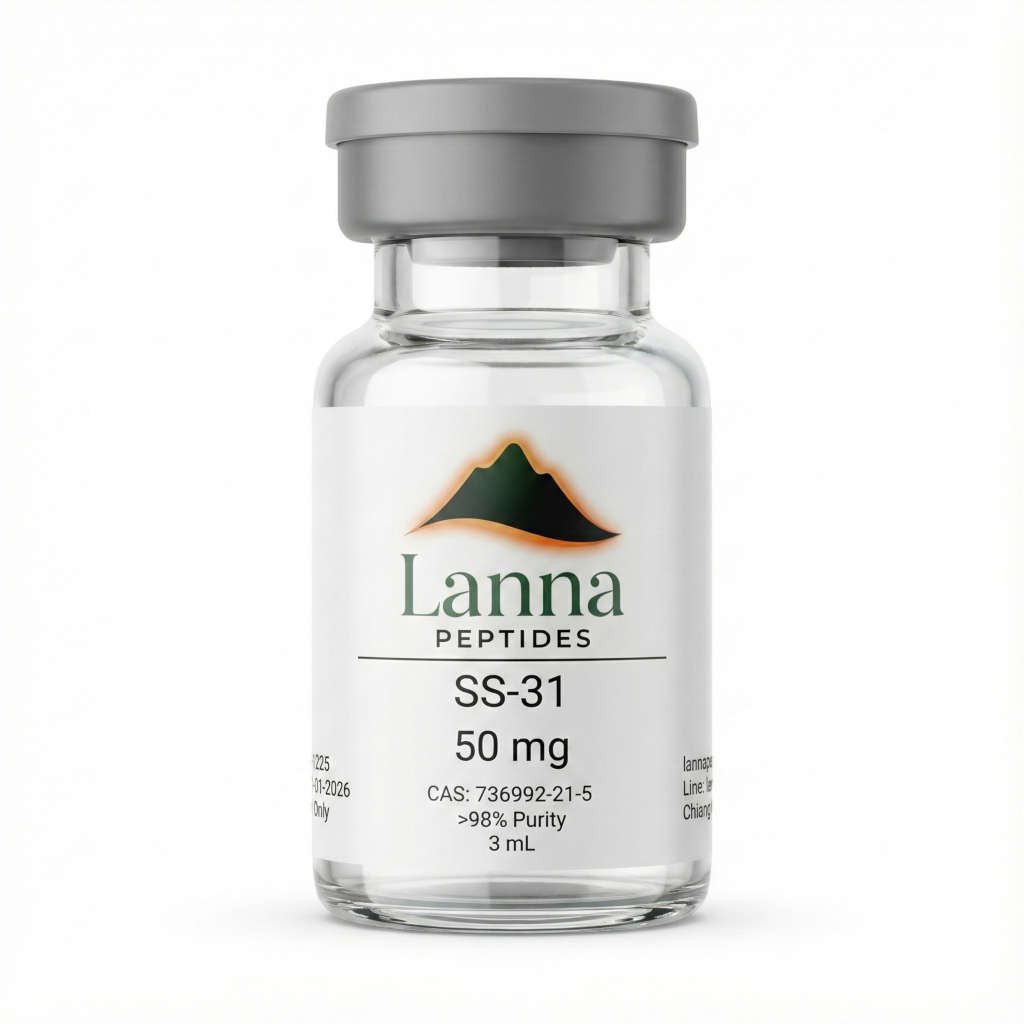
What is SS-31?
SS-31 (Elamipretide) is a tetrapeptide that targets the inner mitochondrial membrane to restore mitochondrial bioenergetics. By stabilizing cardiolipin, it optimizes the electron transport chain and reduces the production of reactive oxygen species (ROS). This unique mitochondrial-protective mechanism makes it a promising therapeutic for conditions driven by mitochondrial dysfunction, including heart failure, kidney disease, and age-related macular degeneration.
Physiological Benefits
- ✔Enhanced Cellular Energy Production: Directly improves the efficiency of the electron transport chain, leading to increased ATP synthesis. This is foundational to all other benefits.
- ✔Potent Reduction of Oxidative Stress: Acts as both a direct scavenger of ROS and prevents their formation at the source, protecting cellular components from damage.
- ✔Cardioprotection: Protects cardiac muscle from ischemia-reperfusion injury, improves cardiac function in models of heart failure, and enhances mitochondrial function in aging hearts.
- ✔Neuroprotection: Crosses the blood-brain barrier and has shown protective effects in animal models of Parkinson’s disease, Alzheimer’s disease, ALS, and stroke by preserving neuronal mitochondrial function.
- ✔Renoprotection (Kidney Health): Protects kidney cells from ischemic and drug-induced injury, a major focus of early clinical investigation.
- ✔Improved Skeletal Muscle Function: Increases endurance and reduces fatigue in models of mitochondrial myopathy and age-related muscle decline (sarcopenia) by boosting muscle cell energy capacity.
- ✔Ocular Protection: Protects retinal cells from oxidative damage, showing promise in treating mitochondrial-driven eye diseases like dry AMD and Leber’s Hereditary Optic Neuropathy (LHON).
- ✔Anti-Apoptotic Effects: Prevents premature cell death by stabilizing the mitochondrial membrane and inhibiting the mPTP, crucial for preserving tissue during stress.
- ✔Potential Anti-Aging Effects: By targeting mitochondrial dysfunction, a key hallmark of aging, SS-31 may mitigate age-related decline in multiple organ systems.
- ✔Improved Glucose Homeostasis: Has been shown in preclinical models to improve insulin sensitivity by enhancing mitochondrial function in muscle and liver tissue.
Use Cases
The primary clinical target as of 2025. Used to improve muscle weakness, cardiac function, and exercise tolerance in patients with this rare genetic mitochondrial disorder.
Investigated for its ability to improve muscle strength and endurance, as measured by the six-minute walk test.
Used in clinical trials to protect retinal pigment epithelial (RPE) cells and photoreceptors from mitochondrial dysfunction and oxidative stress, aiming to slow vision loss.
Another mitochondrial eye disease where SS-31 is being explored to rescue retinal ganglion cells and preserve vision.
Investigated to improve cardiac energetics, diastolic function, and exercise capacity in patients whose heart muscle is stiff and inefficient.
Studied for its potential to protect mitochondrial-rich renal tubules during periods of low blood flow (ischemia), such as during major surgery.
Used experimentally by athletes to enhance endurance, reduce exercise-induced oxidative stress, and accelerate recovery by improving muscle cell energy regeneration. (SubQ administration is preferred).
Investigated anecdotally for conditions thought to have a mitochondrial dysfunction component, aiming to restore cellular energy and reduce fatigue.
Explored in research settings as a potential adjunctive therapy for Parkinson’s, Alzheimer’s, and ALS to protect neurons from mitochondrial decay.
Used by the biohacking community as a systemic “mitochondrial tune-up” to combat the age-related decline in cellular energy production and increase healthspan.
Theoretically useful for protecting organs from the stress of surgery and anesthesia, and for providing the cellular energy needed for healing.
Used in experimental models to pre-treat tissue before a planned ischemic event (e.g., organ transplant, cardiac surgery) to minimize damage upon reperfusion.
Common Research Protocols
⚠ Research Use Only
The following data is for educational purposes only. Lanna Peptides compounds are not for human consumption.
| Route | Typical Research Dosage | Frequency | Notes | |
|---|---|---|---|---|
| Subcutaneous (SubQ) | 4-10 mg per day | Once daily, typically in the morning | This is the most common route for non-clinical research. Dosing is often scaled by weight in animal studies (e.g., 1-3 mg/kg). Human equivalent doses often fall in this range. Cycles of 4-8 weeks are common. | |
| Intravenous (IV) | 0.05 – 0.25 mg/kg/hour (as a continuous infusion) | Continuous infusion over 1-4 hours | This route is used almost exclusively in clinical trials to ensure precise, controlled systemic exposure. It is not practical for general research use. |
Need more technical data?
For a comprehensive analysis including Mechanism of Action, Chemical Structure, Pharmacokinetics, and complete Safety Profile, click the button below to review the full Clinical Summary of SS-31.
Reviews
There are no reviews yet.